

Our editorial team individually chooses every product for kitchen storage that is suggested on neatcupkit. We might get paid if you buy something after clicking on any of these links.
There is a moment in every baker’s life when they realize a hand mixer just won’t cut it anymore. Maybe it’s when you’re sweating over a stiff bread dough, or perhaps it’s when you’re trying to whip meringue while simultaneously pouring hot sugar syrup. That is the moment you start looking for a stand mixer. And almost immediately, you will face the big debate: KitchenAid mixer tilt head vs bowl lift.
Â
Choosing between these two isn’t just about price. It’s about how you bake, what you cook, and even how much counter space you have. Both are iconic machines. Both will change your kitchen game. But only one is the perfect fit for your specific needs.
This guide breaks down the differences, similarities, and nitty-gritty details of the KitchenAid mixer lineup. We will help you decide if you need the friendly, accessible tilt-head or the sturdy, professional bowl-lift.
Before we dive into the deep comparison, let’s look at what defines each machine.
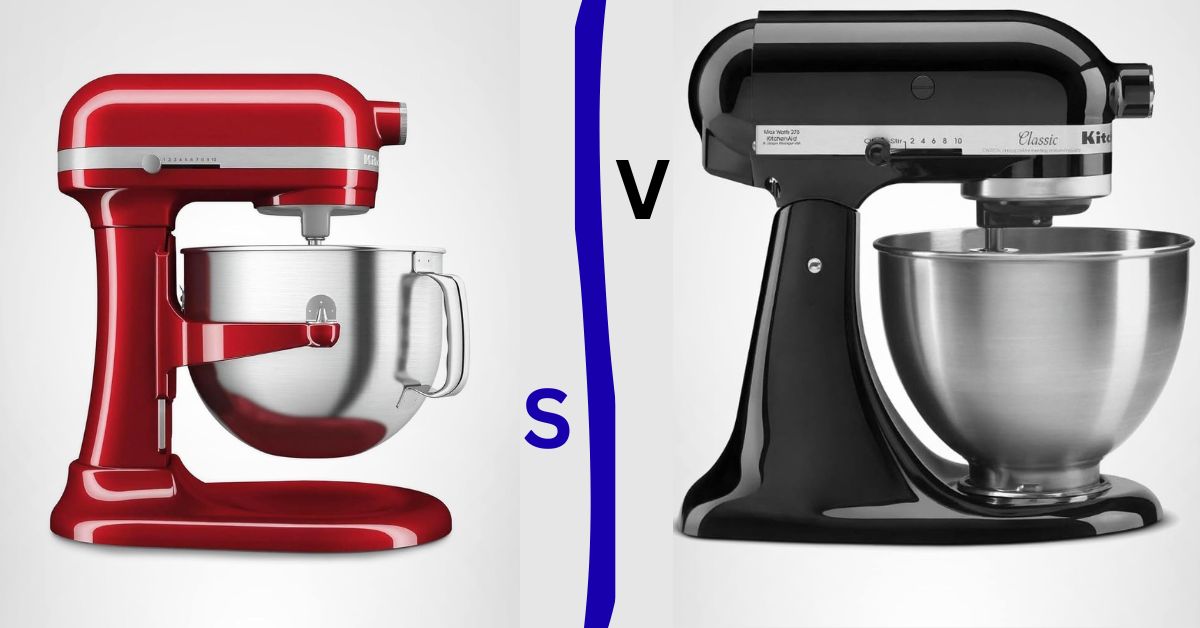
The KitchenAid tilt head mixer is the classic model you probably grew up seeing. It is the machine most commonly found on wedding registries and in home kitchens.
The tilt-head design is incredibly user-friendly. Adding ingredients is simple because you just tilt the head back. It feels personal and accessible, like a friendly baking companion.
What we like
What we don’t like

This electric kitchen mixer offers professional-grade mixing with a high-performance pure copper motor that rotates at 260 RPM. Its planetary mixing action ensures properly blended dough and homogenous batter.

This sturdy stainless steel bowl has a handle and a large capacity of 8.45 quarts. It has a tilt head design and a handle. The mixer's tilt-head design makes it simple to install or remove the bowl and accessories. The large stainless steel bowl makes meal preparation simple, serves family-sized portions, and is dishwasher safe for speedy cleanup.

POWERFUL PERFORMANCE: The 660W pure copper motor of the VIVOHOME stand mixer kneads and mixes more thoroughly and quickly than human hands; All attachments are guaranteed to reach ingredients uniformly across the bowl thanks to its 360° planetary mixing.

"Smart Touch Control with LED" There are four one-touch smart programs on the Bonnor Mixers kitchen electric stand mixer's LED touchscreen: kneading dough, whipping cream, mixing batter, and stirring ingredients. Baking can be mastered by even novices. Bending down is no longer necessary thanks to the top-mounted control panel; simply tap to proceed. Every step is quicker, simpler, and more pleasurable—from kneading bread for Sunday brunch to whipping cream for cakes.

[PRECISION FIT FOR KITCHEN AID 5 QT] Our 2mm silicone liner is designed for a perfect, snug fit in Kitchen Aid 5-quart tilt-head mixer bowls, creating a seamless interior surface perfect for mixing and storage.

Superior Quality: The quality stainless steel used to make our dough hook ensures maximum durability and rust resistance. Bid farewell to peeling coatings and relish a clean, food-safe baking experience.

The 6-QT and 500W motor The kneading noise of MURENKING Stand Mixers could be kept to 80 dB because to their 500W powerful motor. You may quickly switch between slow stirring and fast mixing by adjusting each of the six speeds to suit your different needs.

10-speed control and a pure copper motor6.5QT bowl, multi-speed adjustable, powerful pure copper motor, and a range of recipes. Better ingredient mixing is possible using 3D Multi-Dimensional Planetary Mixing Technology, which mimics manual methods.

The KitchenAid bowl lift stand mixer looks more like what you would find in a commercial bakery. It is built for volume and power.
This machine means business. If you are baking multiple loaves of bread every week, this is the workhorse you are looking for.
What we like
What we don’t like

"1. A 9-liter bowl made of translucent polycarbonate ""S"" blade made of stainless steel The pulse function Internal ejection in the vegetable prep function One 6mm julienne disc (27610), one 1mm slicing disc (27051), one 4mm slicing disc (27566), one 2mm grating disc (27577), and one 6mm grating disc (27046) are included."

A separate purchase is available for the pasta maker, meat grinder, and vegetable cutter. Front output port with a unique design that works with more useful attachments.

Broad Compatibility: This flat beater is ideal for K45, K45SS, KSM75, KSM90, KSM95, KSM100, KSM103, KSM110, KSM120, KSM150, KSM15, KSM152, and KN15E1X Kitchenaid 4.5-5 Qt tilt head stand mixer bowls. It makes cooking more convenient.
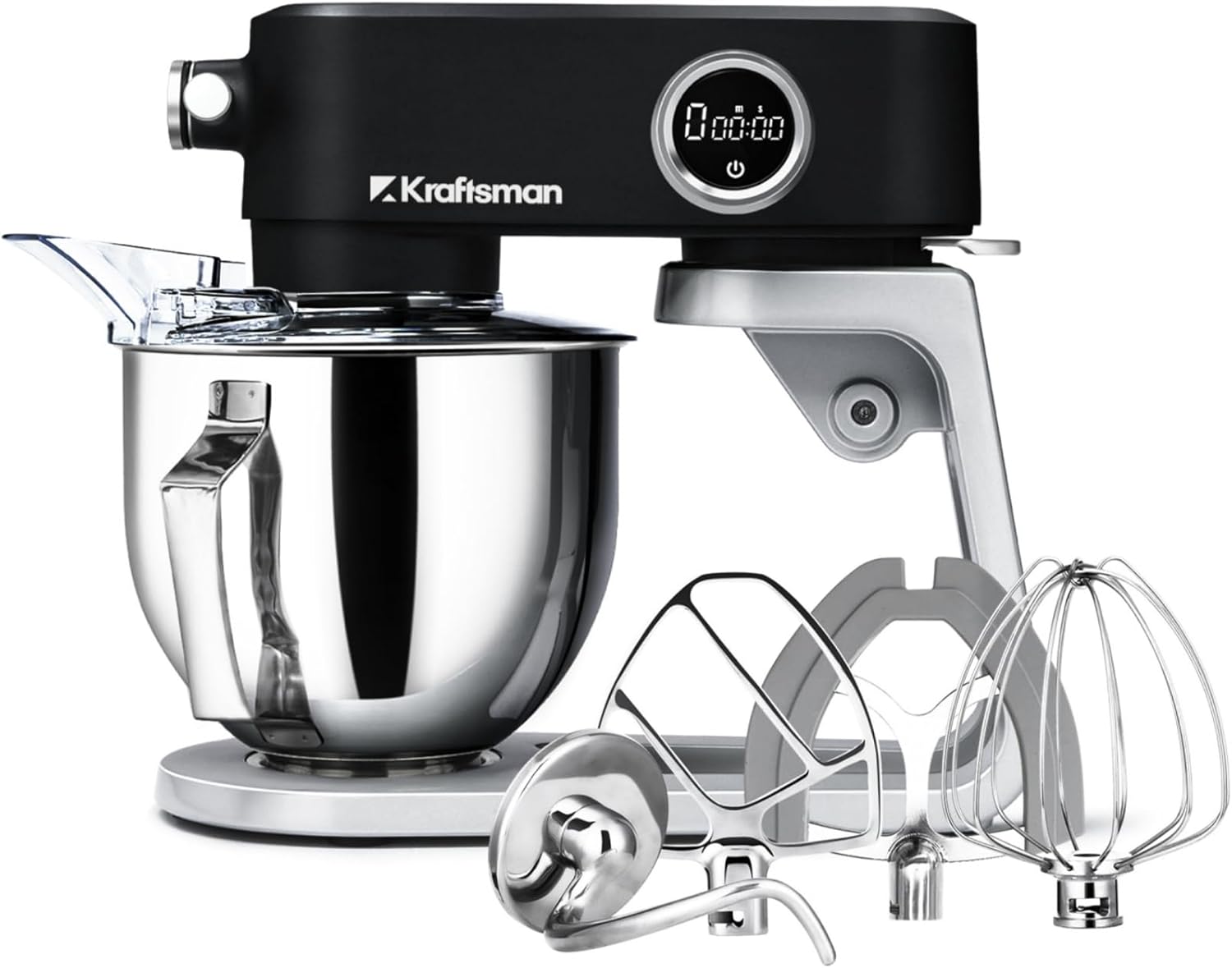
Get Excellent Mixing, Kneading, and Whipping Results: This stand mixer's DC Pure Copper motor, rather than a conventional AC motor, guarantees smooth, effective kneading even when working with large loads. Baking quality depends on kneading dough with a consistent texture and avoiding abrupt speed decreases when dough resistance rises.

Thin cookie dough, compound butter, pies, butterscotch icing, mashed potatoes, and more can all be made with the GVODE stainless steel flat beater for KitchenAid mixers. It performs flawlessly and quickly in a variety of mixing applications.

Professional Spiral Mixing Technology: This technology creates stronger gluten networks for better dough, which leads to better bread and pizza. It has a rotating bowl, a spiral dough hook, and a patent-pending removable breaker bar.

Better MaterialsThe JEASOM 304 food-grade stainless steel mixing bowls are robust and long-lasting. The mixing bowls' brushed stainless steel interiors make them strong and resistant to scratches.

6 SPEEDS WITH PULSE FUNCTION 6 speeds for almost any dish or work. A powerful 660W pure copper motor with a sturdy ABS housing. Strong dough mixer capabilities manage bread dough, meringue, whipped cream, and thick batters. This makes it perfect for both novice and expert bakers.
Now, let’s get into the details. When comparing KitchenAid mixer tilt head vs bowl lift, the devil is in the details.
The primary difference is in the name.
On a tilt-head KitchenAid mixer, you unlock a lever on the side, and the entire motor head lifts up. This makes it very easy to attach the beater, whisk, or dough hook. It also makes scraping the bowl down very easy. You have clear access to the ingredients.
The KitchenAid lift stand mixer has a stationary head. It does not move. Instead, the bowl sits on two sturdy arms. You turn a lever, and the bowl lifts up to the beaters. This design is sturdier because there is no hinge on the head. A hinge can be a weak point under extreme stress, although KitchenAid hinges are very tough.
Do you bake for a family of four, or do you bake for the whole neighborhood?
The standard tilt-head KitchenAid mixer usually comes with a 4.5 or 5-quart bowl. This is plenty of space for a standard batch of chocolate chip cookies (about 8-9 dozen) or a single loaf of bread.
The KitchenAid bowl lift stand mixer generally starts at 5 quarts and goes up. The KitchenAid 6 quart bowl lift stand mixer is a very popular sweet spot. It can handle much larger batches—think 13 dozen cookies or over 8 pounds of mashed potatoes.
If you often double recipes, the KitchenAid 7 quart bowl lift stand mixer gives you the room you need without flour flying all over your kitchen.
Â
This is where motor power becomes a big factor.
Tilt-head models usually run on AC motors ranging from 250 to 325 watts. This is sufficient power for almost any standard recipe. It handles muffin batter and cake mix with ease.
Bowl-lift models are more powerful. They often use DC motors that are more efficient and run cooler. They can range from 500 watts up to 1.3 horsepower on commercial models. If you are kneading stiff dough for bagels or pizza regularly, the bowl-lift’s motor will last longer and struggle less.
Here is the good news: the “hub” on the front of the mixer is universal.
Whether you choose a KitchenAid mixer tilt head vs bowl lift, you can use the same power hub attachments. Both machines can turn into a:
However, the beaters, dough hooks, and whisks are not interchangeable. A whisk for a tilt-head will not fit a bowl-lift. This is important if you are looking for replacement parts or checking kitchenaid mixer tilt head vs bowl lift price on accessories.
For beginners, the tilt-head wins on ease of use.
Being able to tilt the head back to scrape the bowl or add flour is intuitive. You don’t have to remove the beater to get the bowl out.
The bowl-lift takes some getting used to. To remove the bowl, you often have to remove the attachment first. This can be messy if the beater is covered in batter. However, the bowl-lift models often have “soft start” features that ramp up speed slowly to prevent splashing.
Cleaning is similar for both. Most stainless steel bowls are dishwasher safe. The bodies just need a wipe down.
Have you ever seen a mixer “walk” across the countertop?
This happens when a mixer is kneading a heavy ball of dough and the vibrations cause it to shift.
The KitchenAid bowl lift stand mixer is significantly heavier and more stable. The bowl is clipped in at three points (the two arms and the back). This rigidity prevents the bowl from wobbling.
The tilt-head KitchenAid mixer can bounce a little bit with heavy loads. The head can sometimes bob up and down if the locking mechanism isn’t perfectly tight. For kneading heavy bread doughs, the bowl-lift offers superior stability during mixing.
When you look at the kitchenaid mixer tilt head vs bowl lift price, you are making an investment. These are not throw-away appliances. A well-cared-for KitchenAid can last for decades.
Choose the Tilt-Head if:
You are a casual baker. You love making cookies, cakes, and frostings for birthdays and holidays. You have limited counter height. You want a mixer that looks beautiful and comes in a specific color like “Pistachio” or “Dried Rose.” You value ease of use over raw power.
Choose the Bowl-Lift if:
You bake bread weekly. You make large batches of food for parties or a large family. You want to use the mixer for heavy tasks like grinding meat or making stiff pasta dough. You have the counter space (or a dedicated mixer lift). You want a professional-grade tool.
People on forums discussing kitchenaid mixer tilt head vs bowl lift reddit threads often suggest that if you burn out a tilt-head motor on bread dough, you should have bought a bowl-lift. If you stick to cakes and light doughs, the tilt-head is perfect.
The battle of KitchenAid mixer tilt head vs bowl lift doesn’t have a single winner. It has a winner for you.
If you want a friendly, colorful, and easy-to-use partner for your weekend baking, grab a Classic or Artisan tilt-head. It will serve you well for years.
If you want a beast of a machine that can knead sourdough and mix triple batches of cookies without breaking a sweat, invest in a Pro Line or Professional bowl-lift.
Both machines open up a world of culinary possibilities. From homemade ice cream to perfectly shredded chicken, a KitchenAid mixer is the heart of a creative kitchen.
Our Related products:
Self Pushing Drink Organizer for Fridge Costco | 10 Best self pushing drink organizer for fridge costco Spring Loaded in 2025
Top 9 Pop Can Organizers for Fridge in 2025 | The Ultimate Soda Can Dispenser
The 10 Best Water Bottle Organizers for Fridge in 2025
KitchenAid official difference guide — Tilt-head vs Bowl-lift stand mixers explained by KitchenAid. Tilt‑Head vs Bowl‑Lift Mixer Features (KitchenAid)
KitchenAid official product info & buying guide — Stand mixer comparison and how to choose. KitchenAid Stand Mixer Buying Guide (KitchenAid)
KitchenAid tilt-head vs bowl-lift overview page — Clear explanation on designs and differences. Tilt‑Head vs Bowl‑Lift Mixer Basics (KitchenAid)
Prudent Reviews: Key differences between tilt-head and bowl-lift mixers — Size, power, capacity, usability. KitchenAid Tilt‑Head vs Bowl‑Lift Mixers (Prudent Reviews)
Interior Insider comparison — Power, ease of use, stability, color options & pros/cons. KitchenAid Stand Mixer vs Bowl Lift (Interior Insider)
The KitchenAid.com fan site overview — Bowls, mechanism, pros/cons, what differences mean in practice. KitchenAid Mixer Tilt‑Head vs Bowl‑Lift Guide (The‑KitchenAid.com)
YouTube: Tilt-Head vs Bowl-Lift comparison — Official KitchenAid video explaining features. Tilt‑Head vs Bowl‑Lift Mixer (KitchenAid – YouTube)
YouTube general comparison — Side-by-side look at how each mixer style works. KitchenAid Stand Mixer Comparison (YouTube)
The primary difference lies in how you access the mixing bowl and attach the beaters.
Neither is inherently “better,” but they are designed for different users.
There are three main reasons to upgrade to a bowl-lift model:
Both styles are renowned for their longevity, often lasting for decades. However, for heavy-duty use, the Bowl-Lift is considered the most reliable option. Because the motor head is stationary, there is less mechanical stress on the body of the machine during intense mixing sessions.
A common consensus on platforms like Reddit and baking forums is that the Tilt-Head is the best entry-level mixer for the average home cook due to its ease of use and aesthetic appeal (more color options). However, the Bowl-Lift is the “end-game” mixer recommended for anyone who bakes bread weekly or runs a small home business, as it handles the “knead” function significantly better than the tilt-head models.