
Our editorial team individually chooses every product for kitchen storage that is suggested on neatcupkit. We might get paid if you buy something after clicking on any of these links.
Dispose of small kitchen appliances have become an essential part of modern households. From blenders and coffee makers to toasters, air fryers, and electric kettles, these devices make everyday cooking and food preparation easier and more convenient. However, like all household items, kitchen appliances eventually wear out, become outdated, or stop functioning altogether. When that happens, many people are unsure of the proper way to dispose of them.
Unfortunately, throwing small kitchen appliances into regular household trash is not always the best solution. Many appliances contain materials such as metals, plastics, electronic components, and wiring that can harm the environment if not disposed of correctly. Responsible disposal helps reduce waste, conserves valuable resources, and prevents harmful substances from ending up in landfills.
In this article, we’ll explore the best methods for disposing of small kitchen appliances, why proper disposal matters, and how you can make environmentally friendly choices when replacing old appliances. Explore more small kitchen storage essentials in Amazon storefront.
Many people assume that small appliances can simply be tossed into the garbage once they stop working. However, these products often contain recyclable materials such as aluminum, steel, copper, and plastic. Some appliances may also contain electronic components that qualify as electronic waste, commonly known as e-waste.
When appliances are sent to landfills, valuable materials are lost, and certain components can contribute to environmental pollution. Recycling and responsible disposal help recover reusable materials, reduce the demand for raw resources, and minimize environmental damage. Explore more small kitchen storage essentials in the Amazon storefront.
Additionally, many local governments have regulations regarding the disposal of electronic devices and appliances. Following proper disposal guidelines ensures compliance with local waste management rules while supporting sustainability efforts.
Determine the Condition of the Appliance
Before deciding how to dispose of a small kitchen appliance, evaluate its condition.
Ask yourself the following questions:
If the appliance is still functional or only requires minor repairs, disposal may not be necessary. Extending the lifespan of a product is often the most environmentally friendly option.
1.Donate Working Appliances:
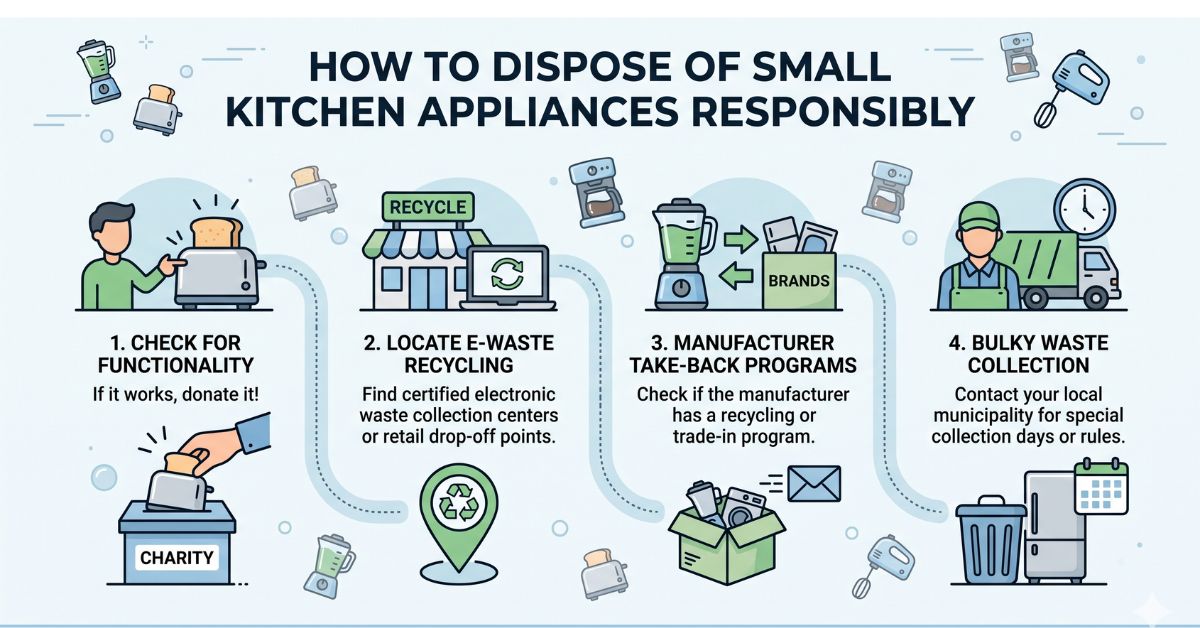
One of the best ways to dispose of an appliance that still works is to donate it.
Many charitable organizations, thrift stores, community centers, and shelters accept donations of small kitchen appliances in good condition. Appliances such as microwaves, blenders, slow cookers, and coffee makers can be valuable to individuals and families who may not be able to afford new ones.
Before donating:
Donating extends the life of the appliance and helps reduce waste while benefiting others.
If your appliance still works but you no longer need it, consider selling or giving it away.
Online marketplaces, local community groups, and social media platforms make it easy to find interested buyers or recipients. Many people look for affordable second-hand appliances, especially students, first-time homeowners, and individuals setting up new households.
Providing accurate information about the appliance’s condition helps ensure a smooth transaction and prevents misunderstandings.
3.Repair Before Replacing:
Sometimes an appliance may stop working due to a minor issue rather than complete failure. Common problems include damaged cords, worn switches, clogged parts, or replaceable components.
Repairing an appliance can often be less expensive than purchasing a new one. It also reduces waste and lowers the environmental impact associated with manufacturing new products.
If you’re comfortable with basic maintenance, consult the user manual for troubleshooting tips. Otherwise, consider seeking assistance from a qualified repair technician.
4.Recycle Small Kitchen Appliances:
Recycling is one of the most responsible disposal methods for appliances that are no longer functional.
Many small kitchen appliances contain recyclable materials that can be recovered and reused. Recycling facilities separate metals, plastics, and electronic components for processing.
Common appliances suitable for recycling include:
Before recycling:
5.Utilize E-Waste Collection Programs:
Many communities offer electronic waste collection programs designed specifically for devices containing electronic components. Explore more small kitchen storage essentials in Amazon storefront.
Although kitchen appliances may not seem like electronics, many modern appliances include circuit boards, sensors, timers, and digital displays. These features often classify them as e-waste.
E-waste programs ensure that electronic components are handled safely and that valuable materials are recovered whenever possible.
Many municipalities organize:
Checking with local waste management authorities can help you identify available options in your area.
6.Take Advantage of Retailer Recycling Programs:
Some retailers offer appliance recycling or trade-in programs. When purchasing a replacement appliance, ask the retailer whether they accept old appliances for recycling.
Retailer programs can be convenient because they allow customers to dispose of unwanted appliances while buying new ones. In some cases, retailers may even offer discounts, credits, or incentives for participating in recycling initiatives.
These programs help ensure that appliances are processed responsibly rather than ending up in landfills.
Scrap Metal Recycling:
Many small appliances contain valuable metals that can be recovered through scrap recycling facilities.
Metal recycling centers often accept appliances made primarily of:
Steel
Aluminum
Copper
Stainless steel
Examples include:
Toasters
Electric kettles
Coffee makers
Mixers
Scrap metal recycling reduces the need for mining new materials and supports a circular economy where resources are reused instead of discarded.
Before bringing appliances to a scrap facility, contact the recycler to verify acceptance requirements.
7.Check Manufacturer Take-Back Programs:
Some manufacturers have sustainability initiatives that encourage responsible product disposal.
These programs may allow consumers to return old appliances directly to the manufacturer for recycling or refurbishment. Returned products may be dismantled, repaired, or recycled according to environmental standards.
Visiting the manufacturer’s website or contacting customer support can help determine whether such a program is available.
8.Avoid Illegal Dumping:
Improper disposal methods such as dumping appliances in vacant lots, waterways, or unauthorized locations can cause serious environmental harm.
Illegal dumping contributes to pollution, creates safety hazards, and often results in costly cleanup efforts. In many areas, it can also lead to fines and legal penalties.
Responsible disposal protects communities, wildlife, and natural resources while promoting cleaner neighborhoods.
Preparing Appliances for Disposal
Regardless of the disposal method chosen, preparing the appliance properly is important.
Follow these steps:
Proper preparation improves safety and makes recycling or donation easier.
Environmental Benefits of Responsible Disposal
Responsible appliance disposal offers numerous environmental benefits.
These include:
Every appliance recycled or reused contributes to a more sustainable future and helps reduce the overall environmental footprint of consumer products.
Dispose small kitchen appliances responsibly is an important part of reducing waste and protecting the environment. Whether an appliance is still functional, repairable, recyclable, or suitable for donation, there are many alternatives to simply throwing it in the trash.
By evaluating the condition of the appliance, exploring donation and resale opportunities, utilizing recycling programs, and taking advantage of manufacturer or retailer initiatives, consumers can ensure that their unwanted appliances are handled in an environmentally responsible manner.
The next time a toaster, blender, coffee maker, or other kitchen appliance reaches the end of its useful life, consider the options available before placing it in the garbage. Small actions can make a significant difference in conserving resources, reducing pollution, and creating a cleaner, more sustainable world for future generations.
Living with a dysfunctional layout creates daily frustration. Investing in new cabinetry transforms how you use and feel about your home. Explore Small Kitchen Pantry Storage Ideas in our Amazon storefront.
How to Organize Pots and Pans in a Cabinet | Maximize Space & Keep Your Kitchen Neat
How to maximize kitchen storage | 12 Smart Ways to Maximize Kitchen Storage Even in Small Spaces
How to Maximize Storage Space in a Small Kitchen | Smart Hacks & Space-Saving Ideas
Better Homes & Gardens – Renovation Timeline Planning Tips
Livingetc – Kitchen Renovation Timeline Guide
This Old House – Kitchen Remodeling Resources
Architectural Digest – Kitchen Renovation Cost Breakdown
The Spruce – Kitchen Remodel Ideas & Renovation Advice
HomeAdvisor – Kitchen Remodel Cost Guide
RSI Kitchen & Bath – Kitchen Renovation Timeline Guide
No — small kitchen appliances should not go in the regular trash. Most contain hazardous materials, including heavy metals, lithium batteries, and flame retardants, that are harmful to landfills, groundwater, and human health.
The following should never go in household trash or curbside recycling:
To dispose of a broken toaster or similar small kitchen appliance, take it to a certified e-waste recycling drop-off location rather than placing it in your bin. Even non-functional appliances contain recoverable materials and regulated substances.
If your small kitchen appliance still works, donating or reselling it is the most sustainable option before considering recycling.
Consider these routes:
Microwaves and larger countertop appliances are typically accepted at municipal hazardous waste facilities or retailer recycling programs, though drop-off rules vary by location.
Because of their size and internal components — including capacitors that can store an electrical charge — microwaves require more care than smaller appliances: