

Our editorial team individually chooses every product for kitchen storage that is suggested on neatcupkit. We might get paid if you buy something after clicking on any of these links.
Picture the smell of burgers grilling on a warm Saturday afternoon. Your friends are laughing on the patio, holding cold drinks, while you prep the sides without ever having to leave the conversation to go inside. That is the magic of an outdoor kitchen. It transforms a simple backyard into a destination—a place where memories are made over shared meals and open air.
If you have been scrolling through endless photos of luxury backyards and thinking they are out of reach, think again. With the right do it yourself outdoor kitchen designs, you can build a stunning, functional space without the luxury price tag. Whether you are a master builder or just handy with a drill, creating your dream al fresco dining spot is more achievable than you think.
Building your own outdoor kitchen isn’t just about saving money (though that is a huge perk). It is about creating something that is uniquely yours. When you hire a contractor, you often get stuck with standard packages or limited choices. But when you take the DIY route, you control every detail. Read article on how to set up ghost kitchen.
Complete Creative Control
You decide exactly where the grill goes. You choose the specific shade of stone for the countertops. If you want a pizza oven right next to your prep station, you can make it happen. You are the architect of your own patio entertainment space.
Significant Cost Savings
Professional outdoor kitchen installations can cost tens of thousands of dollars. Labor alone eats up a massive chunk of that budget. By doing the work yourself, you can reallocate those funds into higher-quality appliances or better materials. You can build a high-end setup on a mid-range budget.
The Pride of Craftsmanship
There is a specific feeling of satisfaction that comes from using something you built with your own hands. Every time you host a barbecue or enjoy a quiet dinner outside, you will look at that space and know you made it happen.
Before you buy a single screw or bag of concrete, you need a plan. Rushing into a build without a clear roadmap is a recipe for frustration (and wasted money). Here is how to map out your project.
Walk out to your backyard. Where does the sun hit in the afternoon? Where is the wind coming from? You don’t want smoke blowing into your guests’ faces.
Think about how you cook. Do you need a massive grill, or is a simple setup enough? Do you need a refrigerator nearby to grab cold drinks, or is a cooler sufficient? Make a list of your “must-haves” versus your “nice-to-haves.”
2. Set a Realistic Budget
It is easy to get carried away with fancy add-ons. Look up “how to build an outdoor kitchen on a budget” to get realistic cost estimates.
Factor in everything: lumber, screws, cement board, appliances, and finishing materials. Don’t forget the hidden costs like permits or renting tools. If funds are tight, consider a modular design that allows you to add features later.
3. Choose Your Location Wisely
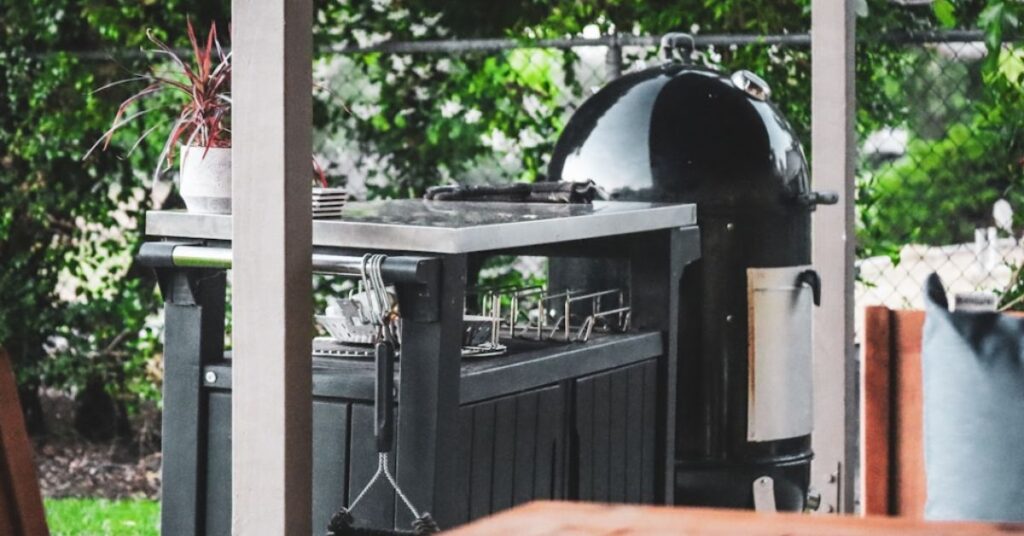
Your outdoor kitchen needs to be convenient. Ideally, place it relatively close to your indoor kitchen. This makes it easier to run back inside for ingredients you forgot.
However, be mindful of smoke. Ensure there is enough ventilation so you aren’t filling your house with fumes every time you open the back door. Also, check for existing utility lines (gas, water, electricity) to minimize trenching costs.
4. Sketch Your Layout
You don’t need professional blueprints, but a solid sketch is crucial. You can find “do it yourself outdoor kitchen designs pdf” guides online to help visualize dimensions.
Mark out zones for prep, cooking, and serving. Ensure there is enough counter space between appliances. This is the time to catch potential problems, like a cabinet door hitting a wall or a grill placed too close to vinyl siding.
The layout determines how well your kitchen functions. The right choice depends heavily on how much space you have available.
Small Spaces: The Linear Island
If you are working with limited square footage, a linear island is your best friend. This simple design places the grill, a bit of counter space, and maybe a small fridge in a straight line.
Look for “do it yourself outdoor kitchen designs for small spaces” to see how efficient this can be. It keeps everything within arm’s reach and fits perfectly against a wall or fence (with proper clearance). It’s efficient, sleek, and perfect for intimate patios.
Medium Spaces: The L-Shape
This is one of the most popular layouts for a reason. The L-shape gives you separate zones for cooking and socializing. One leg of the “L” usually houses the grill and cooking appliances. The other leg serves as a prep area or a bar top for guests to sit at.
This layout naturally creates a social hub. The cook can chat with guests sitting at the counter without stopping their work. It also provides ample storage space for your DIY kitchen cabinets underneath the counter.
Large Spaces: The U-Shape
If you have plenty of room and love to host big parties, go for the U-shape. This design surrounds the cook on three sides with counters and appliances.
It offers maximum utility: dedicated zones for prep, cooking, cleaning, and serving. You can easily incorporate a sink, a refrigerator, specialized burners, and endless storage. It feels like a true professional kitchen, just outside under the stars.
Your outdoor kitchen has to survive the elements. Rain, sun, snow, and temperature fluctuations will attack your creation, so durability is key.
Framing Materials
For the skeleton of your kitchen, you generally have two choices: wood or steel.
Exterior Finishes
What will the outside of your island look like?
Countertops
This surface takes a beating from the sun and spills.
Concrete: Highly durable and customizable. You can pour it yourself for a fraction of the cost of stone.
Must-Have Appliances
Your outdoor kitchen shouldn’t look like a spaceship landed in your yard. It should feel like part of the landscape.

Soften the Edges
Use planters or garden beds around the base of your kitchen structure to blend it with the grass. Climbing vines on a nearby trellis can add privacy and charm.
Lighting is Key
You won’t only be cooking during the day. Good outdoor lighting ideas are essential for safety and ambiance. String lights overhead create a magical vibe. Task lighting near the grill ensures you can see if that steak is medium-rare or well-done.
Seasonal Touches
Don’t forget the fun stuff. Add seasonal decor for outdoor space like cozy throw pillows, weather-resistant rugs, or potted herbs you can use while cooking. These small touches make the space feel lived-in and welcoming.
Building an outdoor kitchen is a big project, but it is one of the most rewarding home improvements you can tackle. It expands your living space, increases your home value, and, most importantly, brings people together.
Start by gathering inspiration. Look for “simple outdoor kitchen ideas” or browse “do it yourself outdoor kitchen designs pinterest” boards. Sketch your plan, set your budget, and take it one step at a time. Before you know it, you will be flipping burgers in a space you built with your own two hands.
The dream of al fresco dining is closer than you think. Grab your tools and get started on your own outdoor oasis.
A basic DIY setup can cost anywhere from $2,000 to $10,000, depending on materials and appliances. If you use luxury finishes or high-end grills, the price can go up. However, compared to a $30,000+ professional install, the savings are massive.
Absolutely. Many “simple do it yourself outdoor kitchen designs” utilize modular frames or simple wood construction that a handy homeowner can manage. However, for gas lines, intricate plumbing, and electrical work, it is safer (and often required by code) to hire a licensed pro for those specific tasks.
Granite and concrete are top choices. Granite is incredibly hard and heat resistant. Concrete is durable and affordable if you DIY it, but it needs to be sealed properly. Avoid materials like laminate, which will peel and rot outdoors.
In most cases, yes. Especially if you are running gas, electricity, or water lines. Even the structure itself might need a permit depending on its size and location relative to property lines. Always check with your local municipality before starting to avoid fines later.
Choose weather-resistant materials like stainless steel, stone, and treated wood. Install covers for your grill and appliances. If you live in a rainy area, consider building a pergola or roof structure over the kitchen. Also, ensure your plumbing has a shut-off valve to drain pipes before freezing winter temperatures hit.