How Much to Replace Countertops in Small Kitchen | 5 Easy Ways to Save

how much to replace countertops in small kitchen

Our editorial team individually chooses every product for kitchen storage that is suggested on neatcupkit. We might get paid if you buy something after clicking on any of these links.

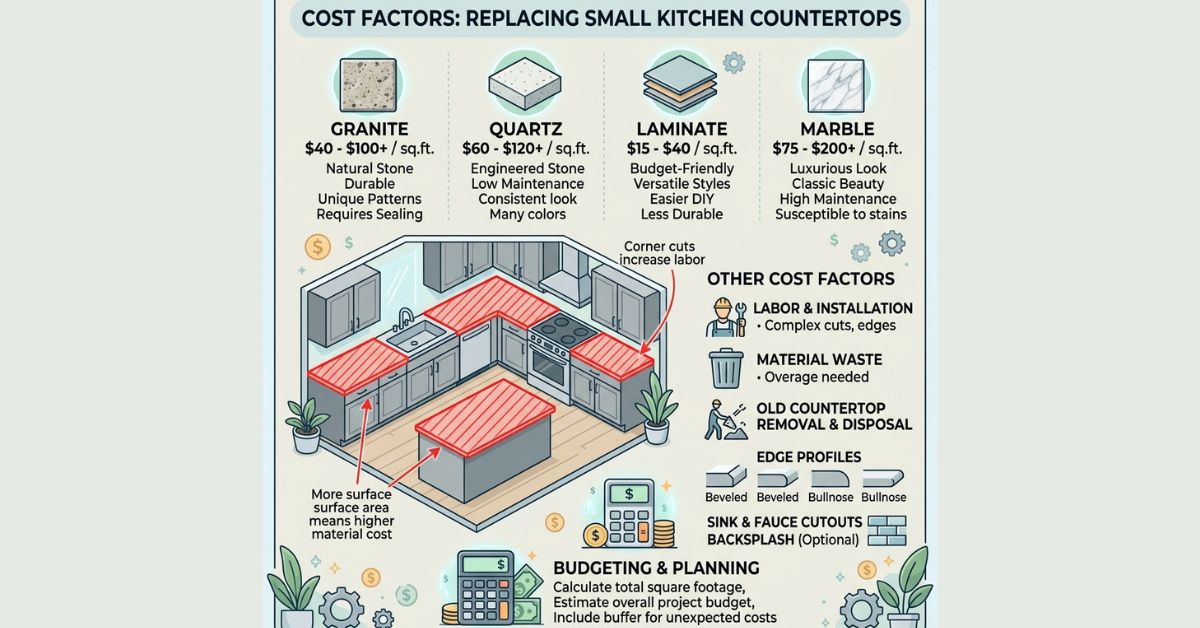
Replacing countertops in a small kitchen (typically 25–40 square feet) costs between $400 and $4,000+, depending on material, labor, and layout complexity. Laminate sits at the budget end, while quartz and granite push costs higher. Smart material choices and minor DIY work can significantly reduce your final bill.

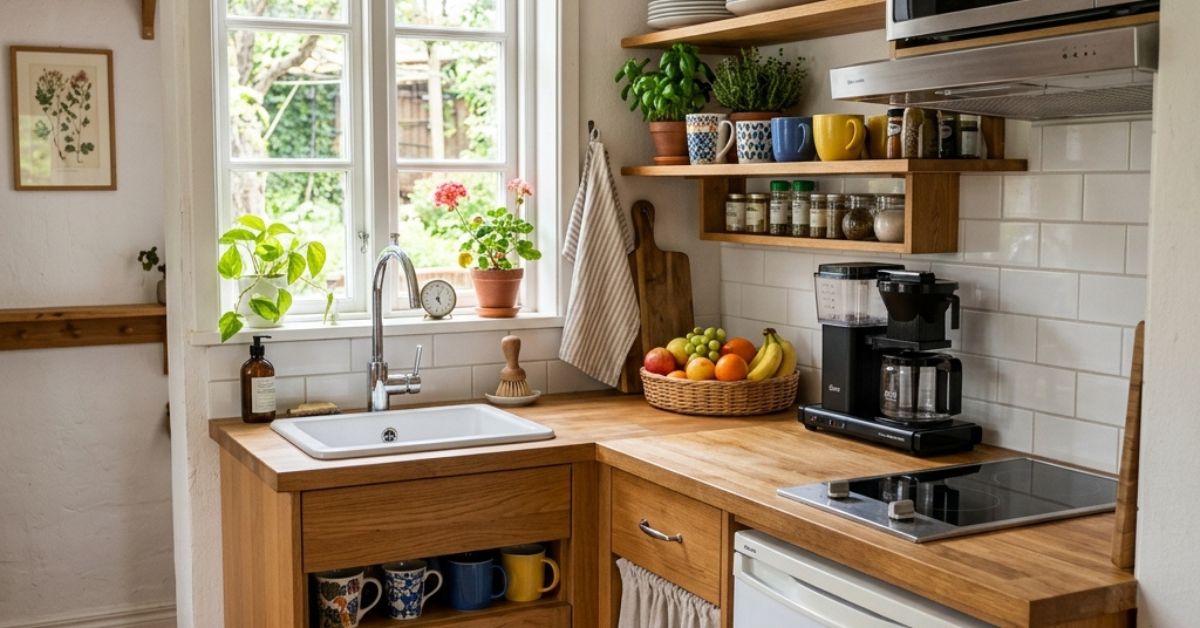
Staring at a countertop that’s cracked, stained, or just plain outdated is frustrating—especially when you’re not sure what it’ll cost to fix it. The good news? A small kitchen actually works in your favor here. Less square footage means lower material costs, faster installation, and more room to get creative with your budget.

But “small kitchen” doesn’t automatically mean “small bill.” The final price depends on several moving parts: what material you choose, how complex your layout is, and whether you hire a pro or roll up your sleeves for some of the work yourself.

This guide breaks down exactly how much to replace countertops in a small kitchen, what drives the cost up or down, and the most practical ways to save money without sacrificing quality.

What Is the Average Cost to Replace Countertops in a Small Kitchen?

Most small kitchens have between 25 and 40 square feet of countertop space. Based on that range, here’s what you can realistically expect to pay in 2026:

Material

Cost Per Sq Ft (Installed)

Total Cost (30 Sq Ft)

Laminate

$15–$40

$450–$1,200

Butcher Block

$30–$70

$900–$2,100

Tile

$25–$60

$750–$1,800

Quartz

$60–$120

$1,800–$3,600

Granite

$50–$110

$1,500–$3,300

Marble

$75–$150

$2,250–$4,500

Labor costs to install kitchen countertops typically run between $10 and $30 per square foot on top of material costs. Removal and disposal of your old countertop can add another $100–$300.

So if you’re asking how much to replace countertops in a small kitchen using quartz, expect to budget somewhere between $2,000 and $4,000 fully installed. Laminate can bring that figure down to $500–$1,500.

How Can I Lower the Cost of Replacing Small Kitchen Countertops?

You don’t need to compromise on style to keep costs reasonable. Here are five strategies that genuinely move the needle.

Buy Pre-Cut Remnants Instead of Full Slabs

Stone fabricators often have leftover pieces—called remnants—from larger projects. Because a small kitchen needs so little material, a remnant slab of quartz or granite can cover your entire countertop at a fraction of the cost of a full slab. Ask your local stone yard directly; these pieces are rarely advertised online.

Choose a Simple Edge Profile

Decorative edge profiles (think ogee, bullnose, or waterfall) add labor time and cost. A simple eased or flat edge can cut your fabrication bill noticeably. It’s a small visual change most people won’t notice once everything is installed.

Do the Demolition (Tear-Out) Yourself

Countertop removal is physically straightforward in most kitchens—it’s largely a matter of disconnecting the sink, cutting caulk, and unscrewing fasteners. Doing this yourself can save $100–$300 in labor. Just check with your installer first to confirm they’re comfortable working with a pre-demolished space.

Mix Materials (e.g., Butcher Block + Quartz)

Mixing materials is one of the smartest budget moves in a small kitchen renovation. Use quartz around the sink (where water resistance matters most) and butcher block on an island or prep area. You get the durability where you need it and the warmth of wood where it shines—at a lower combined cost than using premium stone throughout.

Opt for Countertop Refacing or Overlays

If your existing countertops are structurally sound, overlays—thin slabs of material applied over your current surface—can replicate the look of stone at a fraction of the replacement (replace countertops) cost. Brands like Cosentino offer overlay systems that sit around $30–$60 per square foot installed. Not every material qualifies, but for laminate and tile bases, it’s worth exploring.

What Factors Affect Small Kitchen Countertop Pricing?

Even with a small footprint, certain details can push your kitchen to replace countertops  cost higher than the base estimate.

Material Choice: Laminate vs. Quartz vs. Granite

Laminate remains the most affordable option—and modern laminate looks surprisingly close to stone. Quartz surfaces are non-porous and low-maintenance, making them popular for busy kitchens. Granite countertops require periodic sealing but offer a natural, one-of-a-kind appearance.

The cost to replace countertops with quartz generally exceeds granite in mid-range options, though high-end granite can match or exceed quartz pricing. Your choice between these two often comes down to aesthetics and how much upkeep you’re willing to do.

Seams and Complex Cutouts (Sinks, Cooktops)

Every cutout for a sink or cooktop requires precise fabrication work—and that costs money. An undermount sink cutout, for example, can add $150–$300 to your fabrication bill. If your layout has corners, angles, or an L-shape, expect additional charges for seam placement and fitting.

Old Countertop Removal and Disposal Fees

Many homeowners overlook tear-out costs when budgeting. Installers typically charge $3–$8 per square foot for removal, plus disposal fees. On a 30-square-foot countertop, that’s $90–$240 before any new material is even ordered. Doing this step yourself is one of the easiest ways to reduce your total spend.

Backsplash Integration

Replacing countertops often reveals mismatched or damaged backsplash tiles. If you plan to update both, factor in an additional $300–$800 for a basic tile backsplash in a small kitchen. It’s not required, but most homeowners end up tackling both during the same project.


Is Replacing Small Kitchen Countertops Worth the Investment?

Short answer: yes—especially in a small kitchen. Replacing countertops delivers one of the highest returns on investment in a kitchen renovation. According to Remodeling Magazine’s Cost vs. Value Report, a minor kitchen remodel (which includes countertop replacement) recoups around 85% of its cost at resale.

Beyond resale value, the quality-of-life improvement is immediate. A fresh countertop changes how the entire kitchen feels—and in a small space, that upgrade is even more noticeable.

Related posts

Reference Links: Sources We like

Your Questions, Answered

What is the cheapest countertop material for a small kitchen?

Laminate is the most affordable countertop option, typically costing $15–$40 per square foot installed. Modern laminate mimics the look of stone or wood convincingly and holds up well in low-traffic kitchens. For a small kitchen under 30 square feet, total laminate replacement costs often stay under $1,000.

In most cases, yes. Quartz surfaces generally cost $60–$120 per square foot installed, while granite countertops run $50–$110. The price difference narrows in premium granite grades. Quartz requires no sealing, while granite needs periodic resealing—so factor in long-term maintenance costs when comparing the two.

A small kitchen typically has 25–40 square feet of countertop space. This includes the main counter run, any island or peninsula, and the area surrounding the sink. Use a simple countertop estimator (measuring length × depth in feet) to get your exact square footage before requesting quotes.

Yes, in some cases. Countertop overlays and refacing products can be applied directly over existing laminate or tile if the base is level and structurally sound. This approach saves on removal and disposal costs. However, not all materials support overlays—confirm compatibility with your fabricator before committing.

No. Countertop replacement is independent of cabinetry in most cases. Your installer will simply remove the existing surface and fit the new one onto your existing cabinet boxes. If your cabinets are damaged or uneven, minor repairs may be needed first—but a full cabinet replacement is not required.

Recent Articles

Sign up for Newsletter

Categories

Share

More..

Leave a Reply

Your email address will not be published. Required fields are marked *