Our editorial team individually chooses every product for kitchen storage that is suggested on neatcupkit. We might get paid if you buy something after clicking on any of these links.
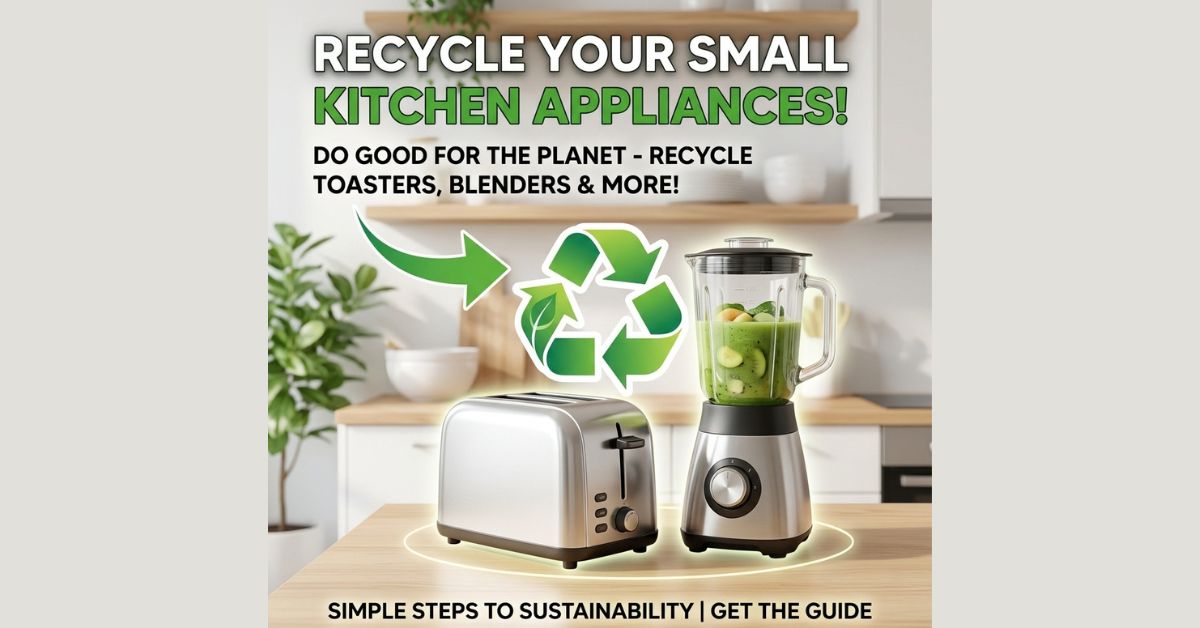
You can recycle small kitchen appliances at major retailers like Best Buy, local e-waste drop-off events, scrap metal recycling centers, and municipal household hazardous waste facilities. Most curbside recycling bins do not accept small appliances because they contain mixed materials and sometimes batteries, so a dedicated drop-off is usually your best bet.
Got a blender that won’t blend or a toaster that’s toast? You’re not alone. Millions of small kitchen appliances get replaced every year, and most of them shouldn’t end up in the trash. Small kitchen appliances are considered electronic waste, and figuring out where to recycle small kitchen appliances can feel confusing. This guide breaks down every responsible disposal option, so you can clear out your kitchen without hurting the planet.
usually not. Curbside recycling programs are built for paper, glass, and certain plastics. Small kitchen appliances mix plastic, metal, glass, and sometimes electric batteries or circuit boards. That combination makes them unsuitable for standard recycling trucks.
Tossing a blender or toaster in your bin can also contaminate an entire batch of recyclables. Many municipal waste facilities will reject the whole load if they spot electronics inside. So before you search “where to recycle small appliances near me,” skip the blue bin altogether.
Instead, look for specialty recycling services. These programs are designed to safely separate metal, plastic, and hazardous parts like a lithium-ion battery or refrigerant. This keeps harmful materials out of landfills and helps recover valuable steel, copper, and other metals.
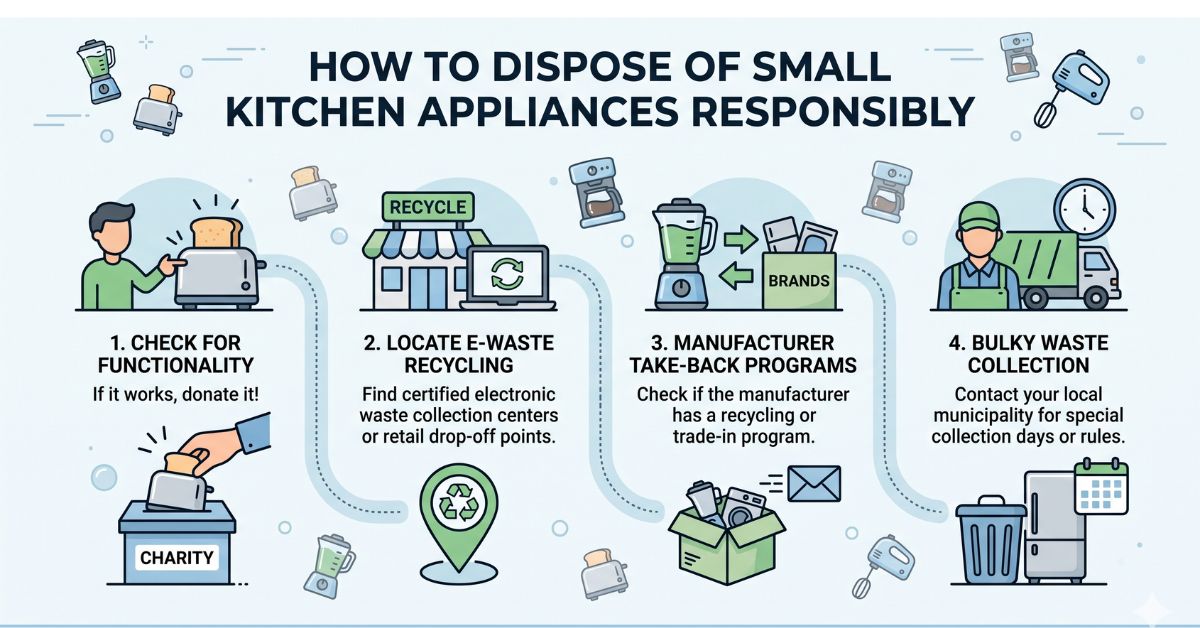
There’s no shortage of options once you know where to look. Here are five reliable paths for small appliance recycling near me (or near you).
Major Retailer Take-Back Programs (e.g., Best Buy, Home Depot)
Retail take-back programs are often the easiest choice. Best Buy recycling accepts a wide range of small kitchen appliances at store drop-off kiosks, and Best Buy recycling is typically free for most small electronics. You can check accepted items and any exceptions on www.bestbuy.com before heading to a location.
Home Depot also participates in electronics recycling centers through in-store programs, particularly for battery-powered kitchen gadgets. These retail take-back programs are convenient because you’re often already running errands there.
Local Municipal Household Hazardous Waste (HHW) & E-Waste Facilities
Your city or county likely runs household appliance disposal programs through municipal waste facilities. Some, like the Miramar Recycling Center, accept a wide variety of electronic waste recycling items, including toasters, coffee makers, and hand mixers.
Search your city’s sanitation department website, or in New York City, check with DSNY (the Department of Sanitation) for scheduled e-waste drop-off locations. These facilities know how to handle hazardous materials safely, which matters if your appliance has a rechargeable battery or refrigerant, like a dehumidifier or mini fridge.
Scrap Metal Recycling Centers
If your small kitchen appliance is mostly metal, a scrap yard might pay you for it. Toasters, mixers, and blenders often contain steel components that scrap metal recycling centers want. This is one of the few appliance donation centers alternatives that can actually put a little cash back in your pocket.
Call ahead, though. Some centers only take pure metal, and won’t accept anything with plastic housing still attached.
Certified E-Waste Drop-Off Events
Many towns host seasonal community recycling events specifically for electronics. These pop-up events are certified e-waste drop-off locations, meaning they follow strict environmentally safe disposal standards.
Check your local government’s calendar for these events. They’re especially useful for disposing of items with an integrated circuit or a display device, like a smart coffee maker with a digital screen.
Manufacturer Mail-Back Recycling Programs
Some appliance brands offer manufacturer mail-back recycling programs. You request a prepaid shipping label, box up your old appliance, and send it back for proper processing. This option works well if you can’t find local recycling programs nearby, or if your appliance is a specialty item that regular recyclers won’t accept.
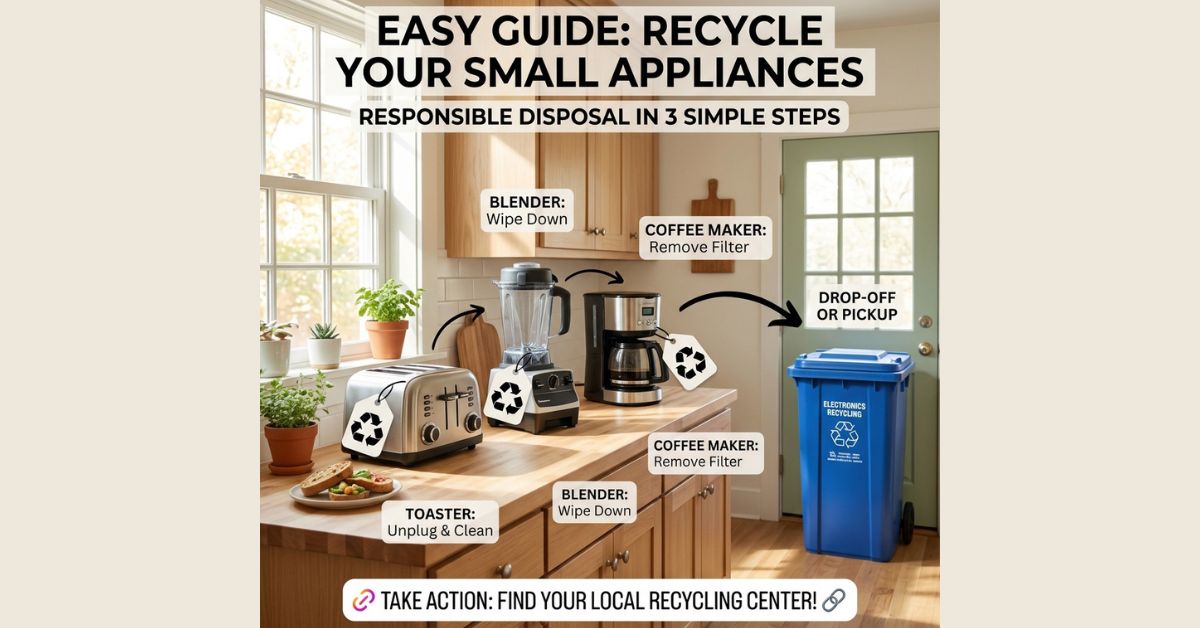
Prepping your appliance the right way makes the recycling process faster and safer for everyone involved. Here’s your quick pre-recycling checklist.
Clean Out Food Debris and Grease
Food residue can attract pests and interfere with recycling equipment. Rinse out blenders, wipe down toasters, and clear crumbs from any hidden compartments before drop-off.
Detach Removable Cords, Glass Parts, or Blades
Many recycling centers ask you to separate glass, like a blender pitcher, from the base unit. Cords can sometimes be recycled separately too, since they’re often pure copper and plastic. Removing sharp blades also protects workers who sort through the bins.
Check for Non-Recyclable Components or Hazardous Materials
Some parts, like certain rechargeable batteries, need special handling. If your small appliance contains an electric battery, a lithium-ion battery, or refrigerant (like a mini dehumidifier), don’t remove them yourself unless instructed. Improper battery removal can be a fire risk. Let certified e-waste recyclers handle it instead.
Recycling isn’t always the best first step. If your appliance still works, consider these environmentally friendly alternatives first.
Donate Working Units to Thrift Stores or Shelters
A working blender or coffee maker can make a real difference for someone furnishing a new home. Thrift stores, shelters, and community centers often accept small kitchen appliances in good condition. This form of reuse keeps items out of the waste stream entirely.
Sell or Give Away on Local Neighborhood Groups
Platforms like Facebook Marketplace or neighborhood apps make it simple to give away or sell appliances you no longer need. This is a fast, no-cost way to practice appliance donation without driving anywhere.
Repair via Local Community “Repair Cafés”
Before giving up on a broken appliance, check if your area has a Repair Café. These community events connect you with volunteers who fix small appliances for free or a small donation. It’s a great option if the issue is minor, like a loose wire or worn-out switch.
Knowing where to recycle small kitchen appliances means your old toaster, blender, or coffee maker won’t sit in a landfill leaching hazardous materials into the ground. Whether you choose Best Buy recycling, a local e-waste drop-off event, or a scrap metal recycling center, every responsible choice adds up.
Before you toss anything, take five minutes to check nearby appliance donation centers or search “where to dispose of electronics for free” in your area. Small actions like this protect both your community and the planet.
How to Organize Pots and Pans in a Cabinet | Maximize Space & Keep Your Kitchen Neat
How to maximize kitchen storage | 12 Smart Ways to Maximize Kitchen Storage Even in Small Spaces
How to Maximize Storage Space in a Small Kitchen | Smart Hacks & Space-Saving Ideas
Lowe’s – Project Source Commander 27-Gallon Heavy Duty Tote
2. Target – Sterilite 27 Gallon Industrial Stacker Tote
3. NIST (National Institute of Standards and Technology) – Unit Conversion
4. OSHA – General Requirements for Materials Storage (29 CFR 1926.250)
5. Moving.com – Moving Box & Storage Container Size Guide
6. Rubbermaid Commercial Products – Storage & Material Handling
7. The Container Store – Garage & Heavy-Duty Storage Solutions
No. Small kitchen appliances contain mixed materials like metal, plastic, and glass, which standard curbside recycling bins aren’t equipped to process. Take them to a dedicated e-waste or appliance drop-off location instead.
Best Buy recycling generally accepts small kitchen appliances at no charge through in-store drop-off programs. Check www.bestbuy.com for current accepted items, since policies can vary by location.
A broken microwave should go to a certified e-waste recycler, municipal household hazardous waste facility, or a retailer with an electronics take-back program. Never place it in a curbside bin, since microwaves contain components that require special handling.
Steel, copper, and other metal components are highly recyclable. Plastic housings can sometimes be recycled depending on the type, while glass parts like blender pitchers may need to be separated and recycled independently.
Yes. Any small appliance with an electrical component, integrated circuit, or battery falls under electronic waste recycling guidelines. This includes toasters, blenders, coffee makers, and similar countertop devices.